A regional Hindu pageant celebrated in Kerala, Vishu marks the astrological New 12 months and the onset of spring. It additionally holds significance as a harvest pageant, aligning with the time when native crops are prepared for gathering, symbolising prosperity and new beginnings for the individuals of Kerala.
Vishu is widely known on the primary day of the month Medam within the conventional photo voltaic calendar adopted in Kerala. Medam 1st is the day on which the Solar re-enters the Medam or Mesa Rasi (Aries) and begins the subsequent cycle. Within the Gregorian calendar, the date coincides with April 14 or 15.
In 2026, Vishu shall be celebrated on April 15.

It’s believed that the celebration of this pageant began within the yr 844 AD. The time period Vishu was derived from the Sanskrit-Malayalam phrase Viṣuvam which suggests ‘equal’. The celebration of this pageant can also be associated to the spring or vernal equinox on which day and night time are equal.
Being the brand new yr, Vishu predictions are immensely well-liked among the many individuals of Kerala.
Learn Clickastro Vishu predictions
Vishu Celebrations
Vishu is a pageant symbolising agricultural prosperity and contemporary hopes for the New 12 months. The celebration of Vishu is exclusive following conventional rituals and observations. These embrace arranging the Vishukkani, providing Vishu Kaineettam, having Vishu Sadya, and different enjoyments equivalent to lighting the fireworks. Usually, Lord Krishna is worshipped on this present day.
Vishukkani is a show of auspicious gadgets together with freshly harvested rice, greens, and fruits in entrance of an idol or image of Lord Krishna. Individuals organize Vishukkani at house and in temples and look at this auspicious association at daybreak on Vishu day.
VishuKaineettam is the custom of the household’s elder members giving cash to the youthful generations and servants. VishuSadya is the standard Kerala feast (Sadya) with some particular Vishu preparations.
The well-known temples equivalent to Guruvayur Sree Krishna temple, Sri Padmanabhaswamy temple, Sabarimala Ayyappan temple, and Kulathupuzha Sree Bala Sastha temple in Kerala have a good time Vishu with nice aplomb. Devotees throng the temples within the early hours of the day to witness the Vishukkani Kazhcha and look at the Vishukkani or the auspicious preparations made on the temple together with the worship of the deities. Devotees additionally supply particular pujas to Lord Krishna on this present day.
Examine Akshaya Trititya
When is Vishu 2026?
Vishu 2026 is on Wednesday, April 15.
The necessary timings of the day are as follows:
Vishu 2026 Timings:
- Sankranti Time: 09:39 AM, April 14, 2026
- Dawn: 6:00 AM, April 15, 2026
- Sundown: 6:29 PM, April 15, 2026
What’s the significance of Vishu?
Agricultural Significance of Vishu:
Vishu coincides with that point of the yr when the indigenous crops are prepared for harvest. It marks the motion of the Solar to Aries or the Mesha Rashi, which the farmers contemplate the suitable time to start plowing the land. Vishu, thus, celebrates agricultural affluence. An important Vishu customized of Vishukkani is the show of freshly harvested agricultural merchandise, together with mangoes, jackfruit, cucumbers, and so forth., together with different auspicious supplies.
In keeping with the standard Kerala Calendar, Vishu is noticed on Medam 1st and the Pathamudhayam happens on Medam tenth. Pathamudhayam is a crucial day for farmers who contemplate it the perfect time for sowing seeds. It’s the tenth day of the month Medam, and the time period Pathamudhayam means ‘tenth dawn’. Historically, this present day is widely known by promoting and exchanging agricultural merchandise. To represent the ten sunrises ranging from Vishu, conventional oil lamps with ten wicks are lit in homes on this present day.
Astrological Significance of Vishu
Vishu is an astrologically necessary event. Although the official Malayalam New 12 months is the primary day of the month Chingam, it doesn’t have any astrological significance. As per the Indian astrological calculations, it’s Vishu that marks the astrological New 12 months of Kerala. It signifies the Solar’s transit into the primary rasi Medam or Aries. It was additionally related to the spring or vernal equinox up to now, the event on which day and night time have equal durations. The Solar getting into into Medam or Aries was used as a means of observing the equinox. Even the time period Vishu was coined from ‘Visuvam’ which means equal day and night time. Progressively, as a result of wobble of the earth, the vernal equinox received shifted to 24 days earlier than the Vishu, on the seventh day of the month Meenam.
Pathamudhayam, which follows Vishu, is noticed on the tenth day of Medam month. Astrologically, the Solar shall be at ten levels within the signal of Medam or Aries on this present day. The normal perception is that the Solar is strongest on this present day, and astrology helps this notion.
Mythological Significance of Vishu:
There are a couple of mythological tales related to the celebration of Vishu. One such story is that Lord Krishna killed the demon Narakasura on this present day. That is one motive for worshipping Lord Krishna on Vishu day.
One other mythological story is related to Surya Dev (Solar God) and the demon king Ravana. As soon as, Ravana prevented Surya Dev from rising from the east and it was solely after the defeat of Ravana, that Surya Dev may resume rising from the east. Therefore, the assumption is that Vishu commemorates the return of Surya Dev.
What’s Vishukkani?
Vishukkani is an important ritual of Vishu. The Malayalam phrase ’Kani’ implies ‘one that’s seen first’. So, Vishukkani refers back to the first sight at daybreak on Vishu. It’s believed that one’s future is a perform of what one sees or experiences originally. If one begins a day or a yr viewing virtuous or auspicious issues, then the entire day or yr could be affluent and fortunate. Since Vishu marks the start of the New 12 months, it’s customary to view the auspicious Vishukkani earlier than dawn on Vishu.
Vishukkani is a grand show of auspicious gadgets organized to be seen as the primary sight on the day of Vishu. It consists of contemporary harvest of agricultural merchandise equivalent to rice, mangoes, jackfruit, coconut, lemon, bananas, areca nut, cucumbers, and so forth., betel leaves, gold, foreign money notes or cash, silk material, a mirror, a holy Hindu textual content, and the golden yellow KaniKonna flowers or the golden bathe flower (Indian laburnum). Vishukkani is a crucial function of Vishu and is organized in each family by the aged womenfolk.
The fruits are set in an Uruli, an open-mouthed shallow round vessel made out of ball steel or brass. All of the gadgets described above, together with a Nilavilakku (the standard bell-shaped oil lamp) are organized in entrance of an idol or image of Lord Krishna. The Vishukkaniis are thought of to be incomplete with no bunch of KaniKonna flowers or Konnappoo as it’s domestically identified. These are vivid yellow flowers, which often bloom on the time of Vishu.
Vishukkani is organized within the night earlier than Vishu. On Vishupulari (the daybreak of Vishu day), the aged woman of the house would get up early and lightweight the Nilavilakku organized within the Vishukkani. Then, the opposite members of the home are woken up by the girl and guided to the place the place the Vishukkani is about, with closed eyes. The members of the family would solely open their eyes in entrance of the Vishukkani to view it as the primary sight of the New 12 months.
The grand visible of Vishukkani with lit-up Nilavilakku in entrance of the picture of Lord Krishna is believed to convey good luck, fortune, and prosperity for all the yr. This tradition is named Kanikaanal (viewing the Kani). The mirror organized in Vishukani is symbolic of viewing oneself as part of the abundance one sees or experiences.
Among the households additionally learn the verses from the Ramayana or Bhagavad Gita after viewing the Vishukkani. It is usually believed that the web page which is opened would have some relation to the particular person’s life within the coming yr.
Vishu Sadhya
Sadhya is the standard Kerala meal served on particular events. Keralites put together Sadhya or the standard feast on necessary events equivalent to Onam, Vishu, and so forth. Aside from the standard dishes for Sadhya, particular gadgets are additionally ready on Vishu utilizing the harvested jackfruits, mangoes, pumpkins, and different seasonal greens and fruits. Vishu Kanji (Vishu porridge) and Thoran, VishuKatta, Veppampoorasam, Mampazhapulissery, Mampazhapachadi, Chakkaerissery, Vishupuzhukku, and so forth. are a few of such particular dishes ready on Vishu.
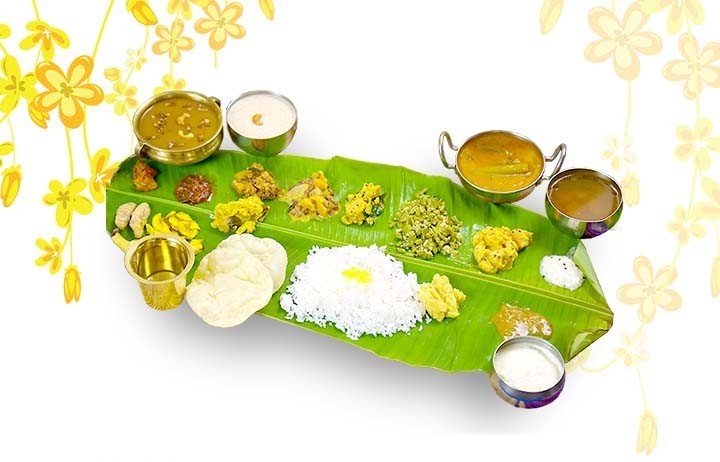
Vishu Kanji is a preparation utilizing rice, coconut milk, and spices. There are some necessary components for the aspect dish Thoran additionally. Vishu Katta is a delicacy ready utilizing freshly harvested rice powder and coconut milk served with jaggery. Veppampoorasam is a bitter preparation of neem and Mampazhappulissery is a type of candy and bitter mango curry ready in coconut and curd.
The preparations equivalent to Mampazhapachadi, Chakkaerissery, Vishupuzukku, and so forth. present a mixture of candy, bitter, salty, and bitter tastes. Such conventional festive recipes combining totally different flavors are a symbolic reminder that one ought to count on all flavors of experiences within the coming New 12 months.
Different customs of Vishu
VishuKaineettam is one other necessary custom of elders gifting cash to youthful ones and dependents of the household. The opposite well-liked traditions embrace shopping for Puthukodi or new garments, setting off fireworks, and arranging processions wherein teams of individuals transfer from home to accommodate and acquire rewards for his or her performances.
Regional Variations of Vishu
Vishu marks the New 12 months within the conventional photo voltaic calendar. It’s celebrated in Kerala, the Tulu Nadu area in Karnataka, the Mahe district of the Union Territory of Pondicherry, and a few areas of Tamil Nadu. Within the Tulu area, this pageant is named Bisu. This identical day is widely known as New 12 months in different areas of India that observe the photo voltaic calendar. Thus, the individuals of Punjab and Haryana have a good time Baisakhi, Tamil Nadu celebrates Puthandu, Assam celebrates Bihu, West Bengal celebrates NabaBarsha and Orissa celebrates Pana Sankranti.
Vishu Competition dates from 2026 to 2028
| 12 months | Date | Day |
| 2026 | fifteenth April | Wednesday |
| 2027 | fifteenth April | Thursday |
| 2028 | fifteenth April | Friday |