Throughout the nation, college district leaders are going through a actuality that few may have predicted earlier than 2020.
Districts throughout the nation are reporting an unprecedented surge of scholars arriving with developmental gaps that stretch far past lecturers. Many early learners battle not simply with phonics or math ideas, however with the very abilities required to take part in studying: sitting for instruction, attending to duties, following multi-step instructions, and regulating conduct in a bunch setting.
The result’s a systemic problem that many directors describe as an incapacity to easily “do college.”
This shift has profound implications. When foundational abilities are lacking, instruction stalls. School rooms develop into reactive environments centered on managing conduct moderately than constructing studying. Lecturers battle to keep up tutorial momentum. And districts more and more face strain to pursue expensive out-of-district placements or extra restrictive instructional settings when college students can’t efficiently take part in classroom studying.
However a rising variety of districts are proving that there’s one other path ahead. These districts are addressing this problem by specializing in data-driven foundational talent growth by way of structured programs like ARIS (Tutorial Readiness Intervention System) to strengthen classroom instruction, construct belief with households, and cut back reliance on restrictive placements and dear out-of-district companies.
By strengthening the foundational abilities that permit college students to take part in studying, districts are higher positioned to help college students of their Least Restrictive Setting (LRE) whereas enhancing outcomes for each college students and school rooms.
The lesson rising from district leaders nationwide is evident: if you repair the foundations of studying, all the things else begins to maneuver. However to know why this shift issues a lot, we first have to know the dimensions of the problem districts are going through immediately.
The Put up-COVID Disaster of “Doing College”
District directors are seeing an unprecedented inflow of younger learners coming into college with out the prerequisite behaviors wanted for classroom participation.
These gaps manifest as:
- Problem attending to instruction
- Restricted activity persistence
- Challenges following routines and instructions
- Elevated disruptive conduct affecting total school rooms
In response, many districts have unintentionally shifted into the reactive mode of managing behavioral crises as they happen moderately than addressing the underlying developmental abilities that make studying potential. The result’s a cycle the place school rooms battle to maneuver ahead instructionally, and applications start to resemble supervised environments moderately than structured studying environments.
As Monica Waltman, Director of Particular Companies at Douglas College District, explains:
“Generally these school rooms regarded extra like a daycare… as a result of there wasn’t a number of construction. College students of their tutorial isolation had been actually struggling.”
Breaking this cycle requires a special mindset, one which treats the talents required to take part at school as express, teachable competencies moderately than assumed talents.
Mastering the “Gears” of Studying Earlier than the Lecturers
Earlier than a pupil can interact with a phonics lesson or a math worksheet, they need to first grasp the mechanics of the classroom. Waltman describes this because the “activity evaluation of a day of college.” This attitude treats “doing college” as a sequence of teachable, measurable abilities like government operate, attending, and social regulation.
College students should first develop the foundational gears of studying—the behavioral and government operate abilities that permit educational instruction to take maintain.
These embody:
- Attending to instruction
- Following routines
- Process completion
- Motor and imitation abilities
- Social engagement and cooperation
Districts implementing ARIS are more and more viewing a college day by way of activity evaluation, breaking down the act of “doing college” into measurable developmental steps. In strengthening these foundational gears, educational studying begins to speed up.
Knowledge from districts implementing a foundational talent strategy persistently present a transparent sample: approaches to studying, useful language and motor abilities growth act as the first drivers of later educational readiness. When these gears flip, math readiness and early literacy start to maneuver with them.
With out this intentional scaffolding, school rooms usually stagnate leaving college students remoted in applications that battle to construct tutorial momentum. As Ms. Waltman observes, “I’d say generally these school rooms regarded extra like a daycare… as a result of there wasn’t a number of construction. [Students] of their tutorial isolation had been actually struggling.” And in immediately’s staffing atmosphere, this lack of construction and tutorial isolation turns into much more problematic.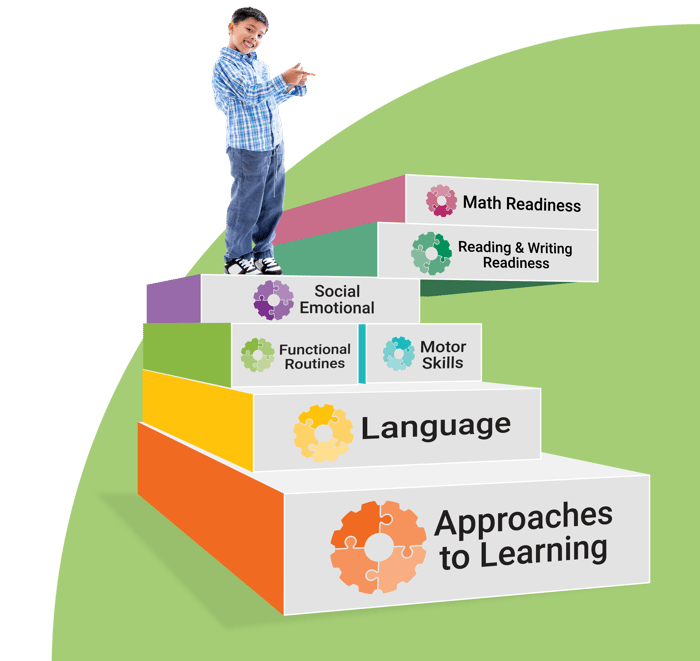
Profitable the “80% Turnover” Battle
The present staffing panorama presents a major risk to tutorial consistency. Tara Geyser of Walton County College District famous a jarring actuality: in high-volatility years, as much as 80% of academics in a given program could also be model new. In such an atmosphere, pupil progress can’t be left to the “trial-and-error” of novice educators.
The answer is to offer a system so structured that it eliminates tutorial guesswork for brand spanking new academics and paraprofessionals alike. That is the place structured applications like ARIS develop into important.
ARIS gives:
- Specific scripted classes
- Scaffolded talent development
- Embedded evaluation programs
- Implementation steerage together with in classroom teaching for each academics and paraprofessionals
This stage of scaffolding permits for quick “tutorial rigor” no matter workers tenure. The proof is discovered within the implementation knowledge of main districts like Indianapolis Public Faculties (IPS), which serves 31,000 college students. In IPS, classroom evaluation implementation skyrocketed from a 25% baseline to a staggering 100% by the third go to. Equally, Birmingham Metropolis Faculties noticed proactive helps rise from roughly 70% to 85%. By institutionalizing these important components, districts can insulate pupil trajectories from the instability of the labor market.
Knowledge because the Final Bridge to Father or mother Belief
Maybe probably the most highly effective shift districts report is of their relationship with households. For a lot of directors, belief with mother and father is without doubt one of the most necessary indicators of a program’s success. Traditionally, this relationship has been strained by subjective observations and “emotions” relating to a toddler’s progress. By transferring towards evidence-based structured evaluation programs, districts are demonstrating a stage of fiscal and pedagogical stewardship that rivals non-public sectors.
Missy Brooks, Director of Instruction and Particular Schooling at Mountain Brook Faculties, shares a strong account of a household that selected to terminate non-public ABA remedy in favor of the district’s program. This wasn’t a choice based mostly on emotion, however on the varsity’s superior knowledge. The district was capable of show the scholar was generalizing abilities within the classroom that had been nonetheless dormant within the clinic. As Brooks displays, “The mother and father had been actually blown away by the info that we had… displaying them the info to allow them to truly see, ‘Oh wow, he is ready to do that now.’ They’re capable of see, ‘We actually see your little one. We care in your little one and we’re rising your little one.'”
When households see goal proof of development, belief strengthens, conflicts lower, and districts see a discount within the expensive disputes, litigation, and out-of-district placements that may happen when progress is tough to exhibit.
Shifting from Emotional to Proof-Primarily based Placement Choices
Out-of-district placements usually occur when districts really feel they don’t have any different viable choice. With out clear developmental knowledge, selections can develop into reactive – pushed by escalating behaviors, authorized strain, or uncertainty a couple of pupil’s readiness for much less restrictive environments.
For districts like Hoover Metropolis Faculties (serving 14,000+ college students) and Walton County, the strategic use of baseline knowledge has allowed them to maneuver from “protection” to “offense” relating to pupil placements. Defensive management reacts to behavioral escalations and authorized strain by defaulting to high-cost, out-of-district placements. Offensive management makes use of goal knowledge to show {that a} pupil is prepared for a Least Restrictive Setting (LRE).
Josie Achenbach of Indianapolis Public Faculties emphasizes that data-informed decision-making strips away the subjectivity usually tied to a pupil’s “label.” When a district can level to particular development in foundational abilities, they’ll confidently advocate for a pupil’s success in much less restrictive, extra inclusive settings. This shift reduces reliance on “tailored” tracks and ensures that placement is a real reflection of pupil want moderately than a response to a district’s inner tutorial gaps.
District leaders know that placement selections carry important monetary implications as nicely. Out-of-district placements can price districts $60,000 to over $150,000 per pupil yearly, and disputes over companies can escalate into prolonged and costly authorized proceedings. When districts can clearly exhibit pupil progress by way of goal knowledge and structured tutorial programs, they not solely enhance outcomes for college kids, additionally they cut back the chance of expensive placements and litigation. On this method, investing in foundational talent growth turns into not simply an tutorial technique, however a fiscally accountable one.
Extending the Classroom into the Residence
To actually get rid of the friction academics face on Monday mornings, districts are extending the classroom footprint into the house. By framing mother or father help as a “24-hour tutorial cycle,” districts can be sure that the foundational abilities constructed throughout college hours are bolstered within the home atmosphere.
By offering mother or father coaching sources and webinars, districts are offering households with the instruments to scale back behavioral obstacles earlier than they attain the varsity bus. Examples of key modules embody:
- Routines to the Rescue: Breaking down every day house life into manageable, stress-reducing steps.
- The Energy of Play: Leveraging play-based studying to nurture early childhood developmental gears.
- Rising Cooperation with Educational Selection: A strategic strategy to providing decisions that will increase motivation and activity completion.
- Gone is “Good Job”: Transitioning mother and father to efficient, particular suggestions that reinforces fascinating behaviors and will increase little one independence.
When mother and father are empowered with the identical instruments used within the classroom, the educational system expands past college partitions—permitting foundational abilities to be bolstered at house and accelerating progress within the classroom.
A Reflection for District Leaders
The hallmark of a contemporary, environment friendly particular training system is the shift from tutorial isolation, the place academics are left to flounder with out instruments, to collective efficacy. When a district adopts a shared, data-driven possession of pupil development, it transforms the organizational tradition.
Shoring up the “gears” of studying early does greater than stabilize a single classroom; it alters a pupil’s total life trajectory. By prioritizing foundational readiness, we transfer past the “daycare” lure and towards a system that honors its mission to show each pupil the best way to be taught.
The districts main this shift have found one thing highly effective: if you educate college students the foundational abilities that make studying potential, you don’t simply enhance school rooms—you remodel total programs.
Is your present system designed to proactively construct the foundations of studying, or is it nonetheless reacting to the friction of lacking foundations?
